
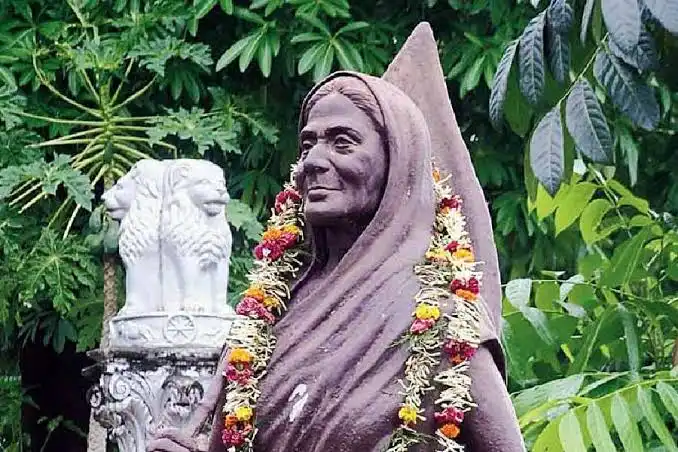
The forgotten heroine of India: The Courageous Story of Matangini Hazra
Key Highlights
- Humble beginnings: Born into a poor peasant family in West Bengal, Matangini Hazra received no formal education and was widowed at a young age.
- A life of service: After losing her husband and son, she dedicated herself to helping poor and vulnerable people in her village.
- Inspired by Gandhi: Mahatma Gandhi’s philosophy of truth, non-violence and resistance deeply influenced her, leading her to dedicate her life to India’s freedom struggle.
- Defying British rule: She participated in the Civil Disobedience Movement and protests against colonial policies, facing arrest and imprisonment.
- The 1933 Governor March: Despite extreme heat and police violence, she pushed through the protest, raised the national flag and challenged the British governor.
- Gandhi Buri: Her commitment to Gandhian principles earned her the name “Gandhi Buri,” reflecting her dedication to the freedom movement.
- Final sacrifice at 73: During the Quit India Movement in 1942, she led hundreds of women towards the Tamluk police station while insisting that the protest remain non-violent.
- Holding the flag until the end: Even after being shot multiple times, she continued marching with the national flag until she was fatally wounded.
- A lasting legacy: Her sacrifice became a symbol of courage beyond age, gender and social status, and a statue was erected in her honour at Kolkata Maidan in 1977.
When someone asked me who, according to you, was the greatest freedom fighter of Bengal? And then the first names that came to my mind were either Subhas Chandra Bose or Mahatma Gandhi. I know you have the same thoughts, too.
Yes, their contributions are widely celebrated, and there is no denying that they are among the greatest freedom fighters. Still, behind these iconic leaders are individuals whose sacrifices remain unknown, and one such courageous woman whose battle cry inspired thousands is Matangini Hazra. My aim with this digital copy is to let you know about her life, struggles, and her extraordinary sacrifices, along with those of other unsung heroes of India and across the world.
Humble Beginnings
Matangini Hazra was born in a small village in West Bengal known as Hogla. Her father was a poor peasant. So from her early life, she struggled financially and thus did not receive any formal education.
She was married at an early age, and her husband was 10 years older than her. Around the age of 18, she was widowed and was without her son. In a society where windows are neglected and isolated, she was left alone without any support. Instead of giving up on life, she chose to become a social worker, and she served society and helped others.
As she was helping people who suffered the same fate as hers and also the poor and needy within her village, she quickly rose to fame among the people of the village, and the community appreciated her kindness, genrosisty and it gained her immense respect.
During this time, India’s freedom movement was started, and it spread like wildfire across the country. Under the leadership of Mahatma Gandhi, the freedom movement gained pace, and his ideas of truth, non-violence, and resistance against the British gained momentum.
As soon as she came across Mahatma Gandhi’s philosophy for the freedom struggle, it moved her deeply. She dedicated her life to following Gandhi’s values and beliefs, and started wearing khadi as her daily outfit. After a few days, she completely dedicated her life to India’s independence.
Now with khadi as her attire, she marched across villages, preached about the freedom struggle, and convinced people to join them in their freedom movement. This gesture made her popular among local activists who shared the same vision as hers.
Challenging the colonial authority
Between the period of 1930 and 1940, she openly challenged British rule. She participated in the civil disobedience movement, which was against the unjust Salt Act. Participation like this showed that she openly questioned the British authority. British rulers noticed her, and she was held captive but was later released. This did not weaken her willpower, and her activism did not go unnoticed.
A few months later, she again participated in the objection against the taxation policies. This time, the British did not show mercy but sentenced her to six months in Behrampur jail. This was the first time she faced imprisonment; instead of giving up and leaving the freedom struggle, it gave her more strength to fight for the truth and continue the independence movement.
The Governor March of 1933
In 1933, something spectacular happened. Congress led a march towards the Bristish governors residence. This was done to abolish unjust colonial policies and demand the people’s independence.
During the protest, the temperature reached 42 degrees, and besides this scorching heat, she, along with her protestors, continued the resistance despite the scorching heat and heavy police violence. The British governor watched the entire revolt from the balcony as if it were a live comedy show. Despite such hurdles, she slipped past the guards, held her flag high, and shouted, “ Go back, Laat sahib.”
She was brutally beaten during the rebellion, yet she did not back down. The witnesses and participants of her protest started calling her “ Gandhi buri, “ meaning the old lady of Gandhi, a title which showed the full commitment to Gandhi’s values and philosophy.
The Final Sacrifice
The most powerful move by this lady came during the Quit India movement in 1942. By now, she was 73 years old, and when most people would choose to stay home and take rest, she continued her struggle for freedom. She, along with her 600 women’s army, marched towards talmuk police station to take control of it from the British police station. This uprising was completely non-violent.
The tension was high, and protestors wanted to attack, but she reminded them that non-violence was their agenda and calmed the crowd. She continually reminded them that the outcry needs to happen with Gandhian principles only.
The British did not show mercy and opened fired; three bullets struck her, but she still did not give up. She continued the march and shouted the patriotic slogan “ Vande Mataram”. The flag was in her hands, and when the fourth bullet struck, she fell on the ground while the flag covered her face and chest. Her sacrifice and patriotism became a symbol of courage.
The legacy continued
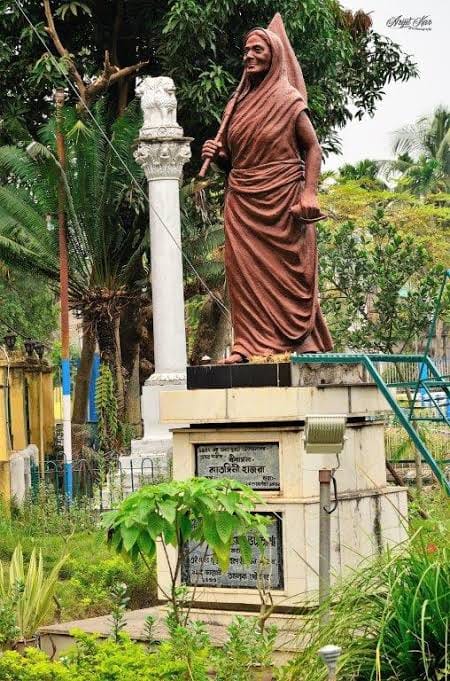

Her death inspired people all across the country. She showed that patriotism is never restricted to age, social status or gender. In 1977, to honour her sacrifice, a statue was erected in Kolkata Maidan. Making her the first female revolutionary to have a statue there. A daily reminder to show her freedom struggle
Remembering the silent sacrifices
This page has been dedicated to letting you know about the people who lived in the shadows but never got the appreciation or the recognition they deserved. Everyone remembers the iconic leaders, but not the ones who did not care about wealth, power, or youth to participate in the freedom movement. All they had was an unshakable commitment to justice. Matangini Hazra is a living reminder that the human spirit is fearless and the quiet heroes have the loudest legacy.








The blog on Matangini Hazra is really except the spelling of “sacrfice” should be sacrifice and there is a change in the size of font between the 5th and six paragraphs. Kindly take care of them.
Thank you , have corrected it