
Batwara 1947 Review: Mother Over Religion
🎬 Need to Know
Period Drama / Historical / Emotional Drama
Rajkumar Santoshi
Sunny Deol, Preity Zinta, Shabana Azmi, Karan Deol, Ali Fazal
2h 25m
14 August 2026
Hindi
Part 1: A Family Torn Apart by Partition
The story begins in 1947, as India celebrates independence. Nehru announces that the country is finally free, but the joy is quickly overshadowed by the violence and chaos surrounding Partition.
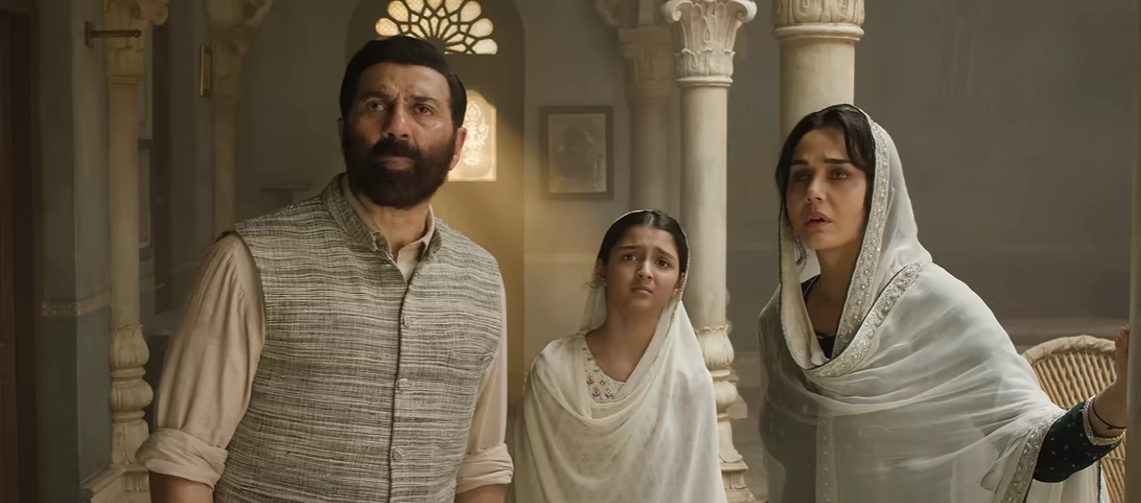
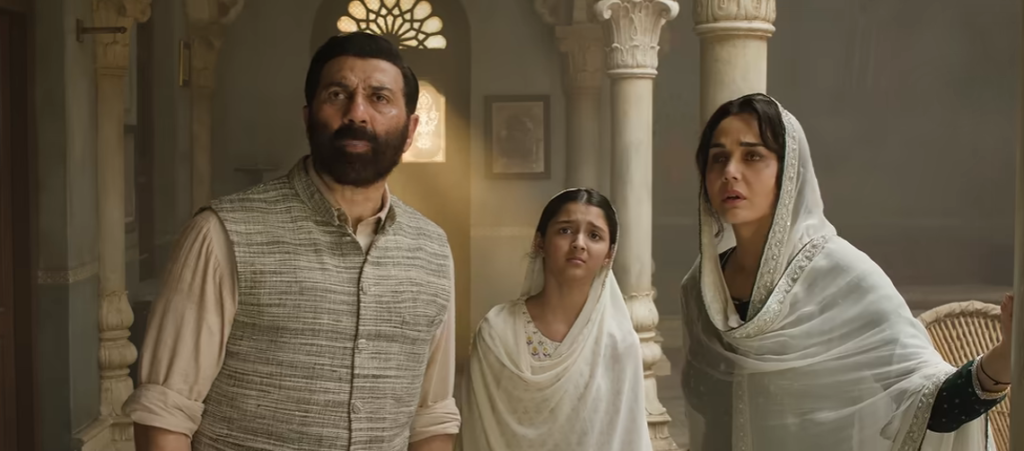
Mirza (played by Sunny Deol) and his family are Muslims who deeply love India and want to celebrate Independence Day. But Partition forces them to leave their home and move to Lahore simply because they are Muslim. After reaching Lahore, the family initially lives in a refugee camp before being allotted a haveli in a Muslim neighbourhood. But there is already someone living there, a Hindu woman (played by Shabana Azmi) waiting for her son, Ratan.
The family initially wants her out. They tell her that she cannot remain there unless she changes her religion. But the woman refuses. She makes it clear that she would rather die than abandon her identity or leave the house while waiting for her son.
Mirza initially considers removing her by force, but something changes when he realises that she is someone’s mother. He refuses to throw her out. However, his son Javed (played by Karan Deol) doesn’t share his father’s sympathy. Having witnessed Muslims being killed during Partition, Javed has developed deep anger and begins seeing Hindus as the enemy.
And this is where the film starts becoming problematic for me. The Partition violence was real and horrific, affecting people from both communities, but the film sometimes feels like it is simplifying that complex history into a one-sided narrative.
Instead of showing the tragedy and brutality on both sides with equal weight, it appears to heavily glorify the Muslim family’s suffering while portraying the Hindu side through a much narrower lens.That makes the setup feel exaggerated rather than historically balanced, even though the underlying story has the potential to explore Partition’s human cost in a much more meaningful way.
Part 2: The Trauma Behind Javed’s Hatred
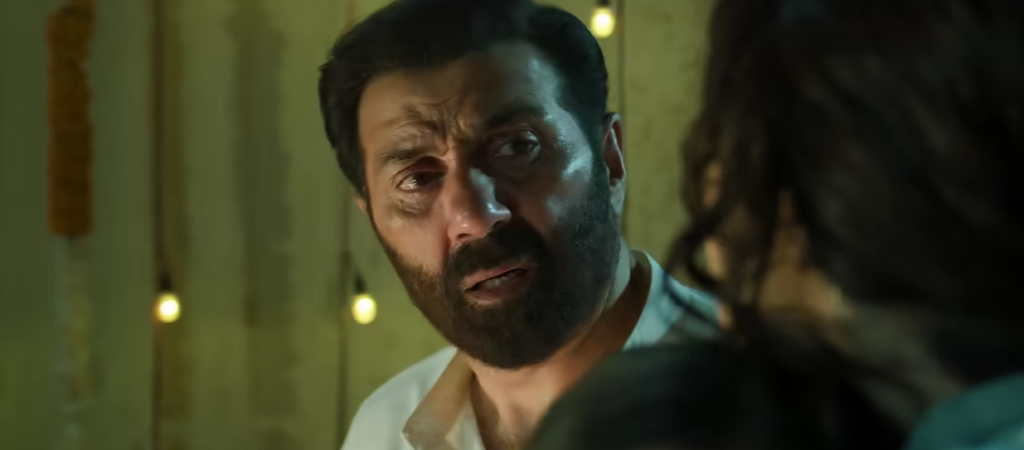
Part two finally reveals why Javed carries so much hatred toward Hindus. He narrates what happened to his family during Partition, when they were trying to escape by train. He witnessed his relatives being brutally killed, including the horrific assault and death of a nine-year-old girl and the killing of his own bhabi.
For a Javed to witness that kind of violence would leave an unimaginable psychological scar. Javed’s hatred isn’t something he developed randomly, it comes directly from the trauma he experienced during the Partition riots.
That trauma also explains why he wants the Hindu woman living in their house gone. To Javed, she represents the community he associates with the violence that destroyed his family.However, the film repeatedly has Javed refer to Hindus as “kafirs,” and this is where the writing becomes uncomfortable for me. The word carries a strong religious and ideological meaning, and its repeated use makes Javed’s character appear increasingly radicalised.
Instead of simply showing a traumatised man struggling with hatred, the film seems to repeatedly reinforce the Hindu-versus-Muslim divide, which makes the characterisation feel heavy-handed.Javed’s backstory is genuinely disturbing and gives us an understanding of where his hatred comes from. But the film needs to be careful not to turn the trauma of Partition into a simplistic justification for hatred toward an entire community.
His hatred reaches a disturbing point when he declares that he won’t stop until he hears the Hindu woman’s screams as she dies.Javed then leaves the house and joins the men from his Muslim neighbourhood, who are already planning an attack to force the woman out of the haveli.
Earlier, Javed had even opened the haveli’s door to allow the attackers inside, putting the woman in direct danger. His father discovers what he has done and slaps him, condemning his actions.Javed, furious and unwilling to accept his father’s decision, walks away from the family and joins the group determined to remove the woman.
And this is where the intermission hits,with the family divided, Javed consumed by hatred, and the Hindu woman still trapped inside the haveli.
Part 3: A Mother Has No Religion
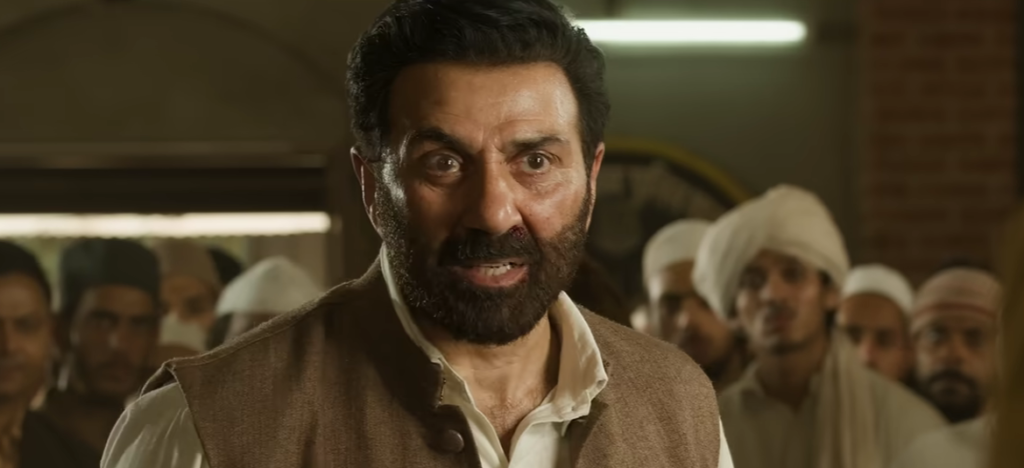
Part three begins with Sunny Deol going to the Lahore police station and demanding that the violence against the Hindu woman stop. He warns that if this continues, the entire city of Lahore could be consumed by hatred and violence.
But instead of supporting him, some people at the police station tell him that he should go back to India and live with the “kafirs.”And then comes the film’s most powerful moment.
For people searching for ” batwara 1947 sunny deol” This film will make them happy as Sunny Deol delivers a breathtaking speech about the woman inside his house. He reminds everyone that she is a mother before anything else. When a child is born, the first word isn’t Hindu, Muslim, Christian, or any other religion; the first word is mother.
His message is simple but incredibly powerful: a mother herself is a religion.
This was the moment in batwara 1947 sunny deol starrer that completely broke me. The dialogue delivery, the emotion and Sunny Deol’s performance come together beautifully. It feels less like a movie speech and more like a direct rejection of the hatred that Partition created.But the tragedy doesn’t stop.
The Hindu woman eventually dies, leaving the family with the responsibility of performing her final rites. Everyone is terrified because openly performing Hindu rituals in Lahore could provoke another attack.
Yet something extraordinary happens.
The people eventually come together and perform her last rites according to Hindu tradition, with “Ram Ram Satya Hai” echoing through the streets.Thousands of Muslims join the procession and stand alongside Sunny Deol’s family as the Hindu woman’s final journey takes place.
Even the people who had come armed to attack them eventually lower their swords and guns.And that final image becomes the film’s strongest statement: hatred may divide people, but humanity can still bring them together.For me, this was the emotional high point of the entire film and easily Sunny Deol’s most powerful moment in the story.
Final Verdict: Emotional, but Only an Average Watch

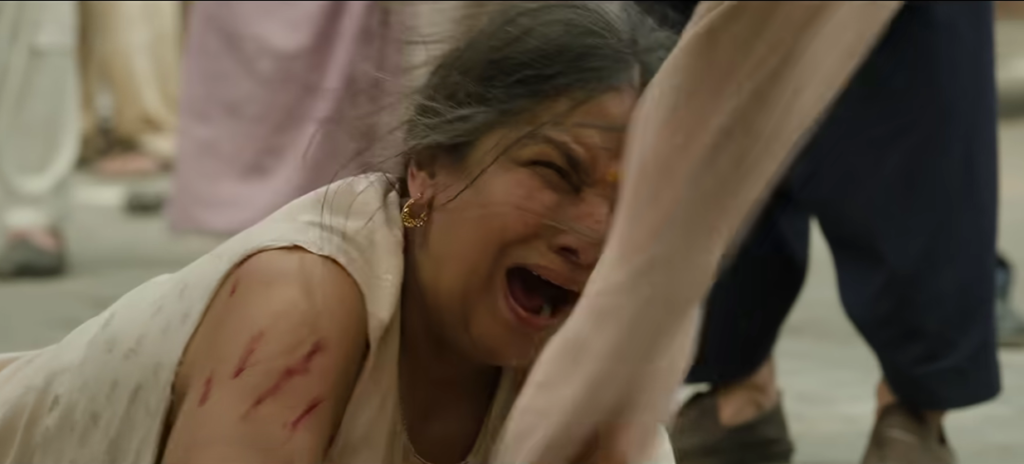
I would definitely call this a better watch than Awarapan 2, The biggest reason is Sunny Deol. His dialogue delivery is absolutely magical, especially in the scene where he declares that a mother is a religion in herself. That moment carries genuine emotional weight, and I genuinely got emotional watching it.
This also gives Sunny Deol’s son an opportunity to prove himself, and while his performance is decent, I wouldn’t call it extraordinary. It’s fairly mediocre in places, but he manages to fit into the emotional tone of the film.Overall, Batwara 1947 sunny deol entertainer is an average film with a lot of emotions. The story can feel exaggerated and predictable at times, but the emotional moments and Sunny Deol’s powerful performance make it worth watching.
Not a great film, but definitely a good watch if you’re looking for an emotional drama.
Watch the trailer here
More Such Awesome Reviews 🎬
Enjoyed this review? Explore our Bollywood archive for more detailed movie reviews, stories, opinions and unforgettable movie moments.
Explore Our Bollywood Archive →